What Is Vastu Shastra? A Clear Introduction
Quick Answer
Vastu Shastra is a traditional Indian system of architecture and spatial arrangement. It offers guidelines on direction, layout, proportion and the placement of rooms and activities. It is a body of traditional knowledge and belief rather than a scientifically established discipline, and many people use it as a framework for thoughtful planning.
Vastu is one of the most frequently asked-about traditions in Indian home and building planning. This article explains what it is, the core ideas it uses, and how it is typically applied — in plain language and without overstating what it can do.
Vastu Shastra — often shortened to Vastu — comes from Sanskrit: "vastu" refers to a dwelling or site, and "shastra" to a body of knowledge or treatise. It has been passed down through traditional texts and practitioners over many generations.
Key ideas in traditional Vastu
- Directions
- Each of the eight directions and the centre is traditionally associated with particular qualities and suitable activities.
- Five elements (Pancha Bhuta)
- Earth, water, fire, air and space are used as a symbolic framework for understanding balance within a space.
- Vastu Purusha Mandala
- A traditional grid used to map a plot or building and reason about the placement of rooms and functions.
How Vastu is commonly applied today
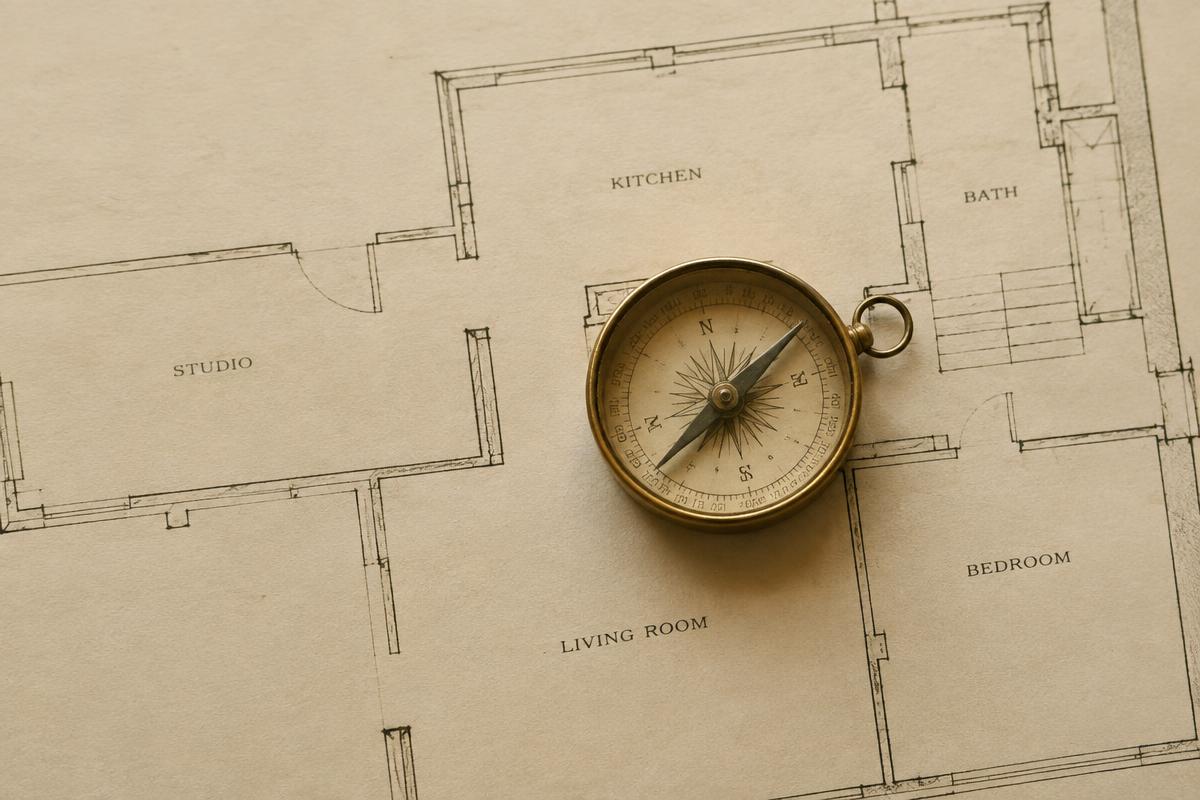
- Reviewing floor plans before buying or building
- Considering room placement, entrances and circulation
- Suggesting practical adjustments to existing spaces, often without structural change
- Planning offices and commercial layouts
Vastu is a traditional and spiritual practice. It does not guarantee health, wealth or any particular outcome, and it is not a substitute for architectural, structural, legal or professional advice.
Key Takeaways
- Vastu Shastra is a traditional Indian system of spatial arrangement.
- It works with directions, the five elements and the Vastu Purusha Mandala.
- Many suggestions involve placement and use, not construction.
- It is a traditional practice, not a guarantee of any outcome.